Could That “Bank Employee” Be an AI Imposter? Know the Warning Signs.

You receive a call that appears to come from your bank. The caller knows your name, mentions a recent transaction, and sounds professional. But the voice, caller ID, and personal details may all have been generated or manipulated by a scammer.
Advances in artificial intelligence are making bank impersonation scams more convincing. Criminals can use AI to create realistic voices, messages, images, and videos. They can also disguise their phone number so it appears that the call is coming from a trusted source.
Even cautious and experienced individuals can be targeted.
What This Scam Is
An AI impersonation scam occurs when a criminal uses artificial intelligence to imitate a trusted person or organization. The scammer may pose as a Lexicon Bank employee, business associate, government official, friend, or family member.
The goal is to gain your trust and persuade you to share sensitive information, provide a verification code, click a link, or transfer money.
How the Scam Works
- You receive an unexpected call, text, email, or video message from someone who appears or sounds legitimate.
- The person may claim there is suspicious activity on your account, a problem with your card, or another urgent financial matter.
- They may use personal details to make the story more believable.
- They pressure you to act quickly by sharing account information, providing a verification code, or moving money to a supposedly safe account.
- Because the communication appears authentic, you may feel comfortable following the instructions.
How to Protect Yourself
- Pause Before Taking Action. Scammers often create fear or urgency to prevent you from thinking clearly. Take a moment to evaluate the request before responding.
- Do Not Trust Caller ID, Voice, or Video Alone. Phone numbers can be disguised, and AI can convincingly imitate a person’s voice or appearance. These details are not enough to confirm someone’s identity.
- Verify the Call Independently. End the conversation and contact Lexicon Bank using the number on the back of your card or another trusted contact method. Do not call a number provided by the person contacting you.
- Never Move Money to Protect It. A scammer may claim your funds are at risk and instruct you to transfer them to a safe, secure, or temporary account. Do not send money based on an unsolicited request.
- Protect Your Security Information. Never provide your username, password, PIN, full card number, or one-time verification code in response to an unsolicited call, text, or email.
- Enable Account Alerts. Turn on notifications for account logins, password changes, purchases, transfers, and other activity so you can identify suspicious transactions quickly.
- Report Suspicious Activity Immediately. If you believe you shared information or sent money to a scammer, contact Lexicon Bank immediately. Acting quickly may help prevent additional unauthorized activity.
Remember This Rule
- No matter how professional a caller sounds, how familiar a voice seems, or what phone number appears on your screen, always verify an unexpected financial request before sharing information or sending money.
- If you receive a suspicious communication that appears to be from Lexicon Bank, end the conversation and contact us using the number on the back of your card or another trusted contact method. We can verify the communication and help you report anything suspicious.
At Lexicon Bank, your security is always top of mind. We are committed to protecting your financial safety and will continue to provide updates to help keep you informed.
Should you need assistance with your personal or business banking account at Lexicon Bank, click below to schedule an appointment, or speak with your relationship manager at 702.780.7700—we’re here to help!
Schedule time with a Lexicon Bank relationship manager today.
*Disclaimer: The above information is advisory and general. It does not constitute definitive or legal advice.
You Might Like ...
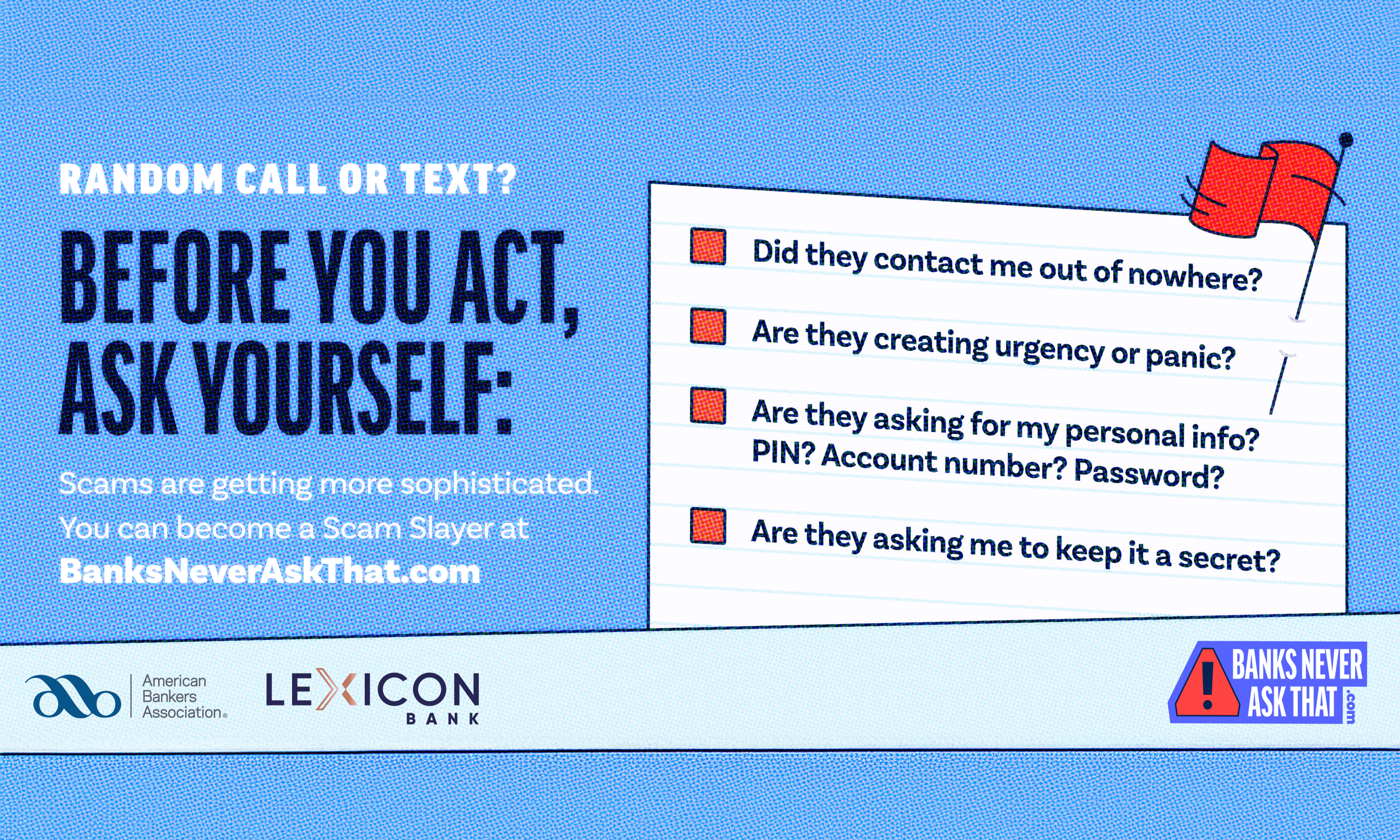
Spot the Scam Before It Starts. #BanksNeverAskThat

Security Alert: AI-Powered Phishing Scams Are Evolving